Communication, Education, High School, Technology, Teenagers |
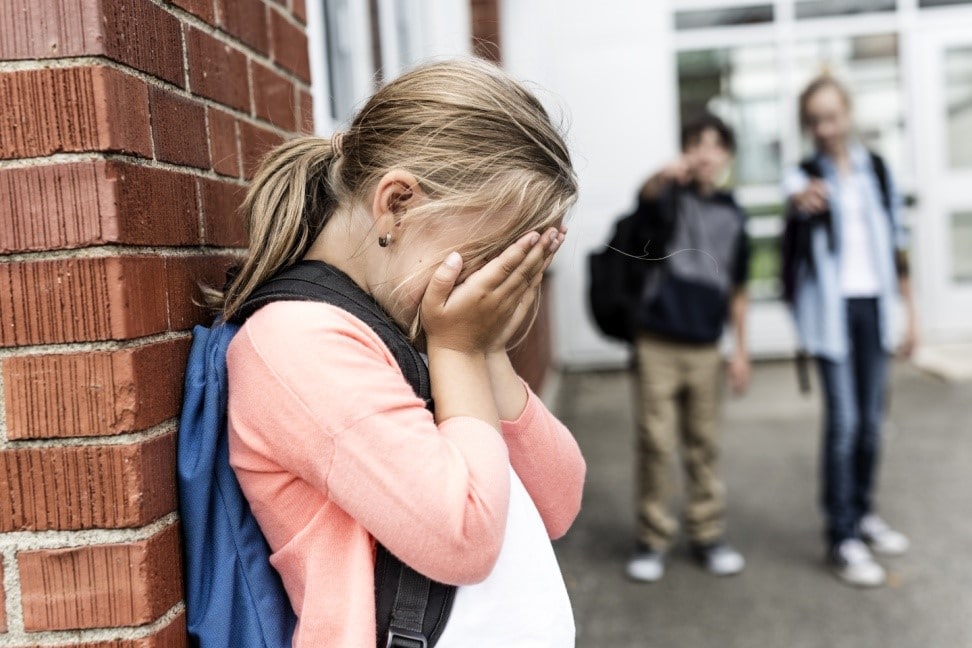
Think back for a minute and envision the days when you were in grammar school. Chances are when I say the word “bullying,” a few faces probably come to mind instantly. You can most likely think of at least one person who was bullied and at least one person who was the one doing the bullying. Every school had them. They existed in every grade. Some bullying was worse than others, but it affected the kids none the less.
The biggest difference about then and now is that back then, we knew our bullies. We could talk to our teachers, our principals, our parents, and try to work out the differences and at least try to agree to put an end to the bullying. These days, the bully is often times hidden behind a computer where the simple strokes of their keyboard leaves imprints on those they bully forever.
Cyberbullying, or the use of electronic communication to bully a person, is faceless and often times nameless. A person can hide behind the keys, so to speak, and be anyone they want to be and say anything they want to say, often times with no repercussion or consequences. It is for this reason that cyberbullying is on the rise and happens so often. Things are said online that one would never have the courage or audacity to say to someone’s face.

Cyberbullying can occur on social media and various apps that the child is using and often times, the parents or guardians are none the wiser. Sometimes parents may find themselves in a situation where they aren’t even aware of all of the apps and websites that their child visits or has accounts on. The greater their online presence, the greater their chance of being bullied becomes.
Knowing the Signs
The good news is that as parents or caregivers, you are not totally helpless in spotting and addressing bullying. There are some signs that your child may exhibit if they are involved with cyberbullying.
Keep an eye out to see if your child:
- Hides their screen or device when you or others are nearby and could sneak a peek
- Won’t discuss what they are doing on the internet
- Has a sudden increase/decrease in frequency of device use or is using it at strange hours
- Shows anger or other high emotional responses when using their device
- Starts to dodge social situations (particularly those that were once loved), becomes depressed, or shows no interest in people and/or activities
- Creates new social media accounts or deletes their account
If you noticed any of these signs, your child may be involved with cyberbullying.
I noticed some signs. What next?
If your child is showing some signs of cyberbullying, it’s important not to push it to the wayside in hopes that it will resolve on its own. Often times, as a means of avoiding confrontation or having an awkward discussion, that’s what happens. Keep in mind that you are the adult. You are your child’s advocate. You know it’s not right and it needs to stop and be addressed.
Let your child know that you are concerned that something is happening to them online and that often times people pick on others in this manner because they are unhappy and lack confidence themselves. Make sure you talk to your child in a private, nonthreatening setting and remain calm and collected.
If they admit to being bullied, dig deeper to try and find out where the bullying is occurring. Often time’s people need to be blocked or accounts need to be deleted and then reestablished under a new user name. This is unfortunate, but can act as a deterrent for the bully.
If the bullying is happening through a school site, administrators should be contacted immediately to help put an end to the situation. All parties involved should be addressed and the manner should be put to rest. If the bullying continues or starts back up, further action is needed by the school.
Perhaps the best way to understand cyberbullying is by perusing the social media, gaming, and other frequented apps yourself. Having an understanding of how they work and how people interact on these sites may prove to be invaluable, especially when you have the discussion with your child and try to take corrective measures. You may have accounts on these sites and have witnessed the bullying that can occur first hand. Knowledge is power and it will help if you know all about those apps that your child visits.

Luckily, devices often are made with a parental control feature. Some are more detailed than others, but they allow you to have some control over what your child is allowed to do while on the computer/phone/tablet/etc. Make good use of these parental controls. Put a lock on various things that could be of danger or should be regulated. This way, you will have to enter a secret code that you created to give them access to those areas. It’s also advised to change that code on a regular basis.
Always remember, you are your child’s biggest role model. They look up to you in every area. Demonstrate positive behavior and positive interactions with others. Assist your child in building self-awareness and teach them to have empathy for others. This goes a long way.
Cyberbullying will probably always have some hold on the internet, because it’s an easy, faceless way for cowards to attack and prey on others. It’s important for everyone to know what to look for to spot if it’s happening, and what to do if they think it’s occurring.
For any additional resources or tips on how to prevent bullying, visit:

All Educations, Career Ready, Education, Technology, Teen Mental Disorders, teen moms |

Danielle Yanssens
Personalized Learning “refers to a diverse variety of educational programs, learning experiences, instructional approaches, and academic support strategies that are intended to address the distinct learning needs, interests, aspirations, or cultural backgrounds of individual students”, according to The Glossary of Education Reform by Great Schools Partnership. How does Back on Track, offer personalized learning?
When a student submits an inquiry online or calls the Back on Track office, we are able to offer them several different options to acquire their high school diploma. For students who have previously dropped out of high school and are 21 or older, we enroll them into Clintondale Virtual School, a credit recovery program which, for a small fee, allows adults to achieve their high school diploma. This appeals to adults who had considered getting their GED in the past, which limits their options for post-secondary education.
For those students who have previously dropped out of high school and are between the ages of 18 and 20, we suggest our tuition-free Step Up program where students work on one class at a time and are required to complete a minimum of one class per month, with the ability to work year round. This gives students the opportunity to work on completing their high school education at a faster rate than if they attending a full time high school. We have also found that for this population, students are able to find more success when focusing on just one course at a time, rather than the full six class course load.

Many students who are between the ages of 16 and 20 choose to attend one of our brick and mortar alternative education schools. This student population includes students that are teenage parents, potential dropouts, have been expelled from their traditional school, or have been court-ordered by the juvenile detention systems. Our alternative education locations offer various skilled trade courses where students can graduate with a certificate of completion to help them obtain employment right out of high school. While there is increased security at these locations, they are also staffed with caring employees who encourage students to complete their education and get on a better path for their future.
Parents with students in grades 6 through 12 will often contact us requesting information about our virtual school, My Virtual Academy. MVA partners with school districts throughout the state of Michigan, offering a fully online option for students. This appeals to a wide variety of students, including those looking to graduate early, students who struggle with mental or physical illness, teenage parents, students who do not feel safe in their traditional school due to bullying or students who have to work full time in order to help support their family. We have students who are pursuing their passion, such as the theater or gymnastics, and choose online schooling to work around their schedules. Some parents even prefer their children attend a virtual school based on their cultural and religious beliefs.
In addition to the several different educational programs Back on Track offers to help meet the different learning needs of our students, we also offer a variety of learning experiences and instructional approaches. Our highly qualified, certified teachers ensure that the curriculum meets all Common Core Standards. Teachers have the ability to offer students different types of assessments based on their instructional needs, and offer in-person tutoring in addition to daily online tutoring. Students receive one-to-one instruction, with teachers contacting them a minimum of once per week, as well as participating in whole group activities in our weekly live sessions.
While there are some obvious limitations to virtual and alternative learning, the many benefits often make Back on Track the best option for many students.

All Educations, Books, Education, Technology |
The importance of reading has always been a great necessity since the beginning of time. Mankind originally created a means by which to communicate with one another in the form of print, most commonly known as Egyptian hieroglyphics.
In today’s society, children must be exposed to print in the earliest stages of life. Mothers read to their unborn children to set the precedence for the fundamental successes of educational development. Just think about the service we could provide to our children if everyone adapted to the idea of reading to their children even before they are born. It would be like the metamorphosis of a caterpillar becoming a butterfly!

We are very fond of Carl Sagan’s quote: “One of the greatest gifts adults can give – to their offspring and to their society – is to read to children.”
As educators, we understand the importance of reading to children of all ages. We believe that the more exposure a child has to reading at a young age, the more likely they are to enjoy it and become avid readers as adults. It’s become a new tradition for expecting parents to request that guests attending their baby shower bring a book instead of the traditional card to add to their baby’s bookshelf. We start to accumulate books even before our children are born. It’s never too early to start reading to our children and influence them to become readers themselves! At My Virtual Academy, reading is integrated cross-curricular throughout our students’ online education. Both our online high school and middle school students are actively engaged in various reading activities within our clubs, weekly live lessons, monthly thematic units, and our daily virtual lessons. It is our goal to instill the value of reading into our students on a daily basis.
We encourage and challenge you to spread your wings and immerse yourself in the exciting world of literature!!


